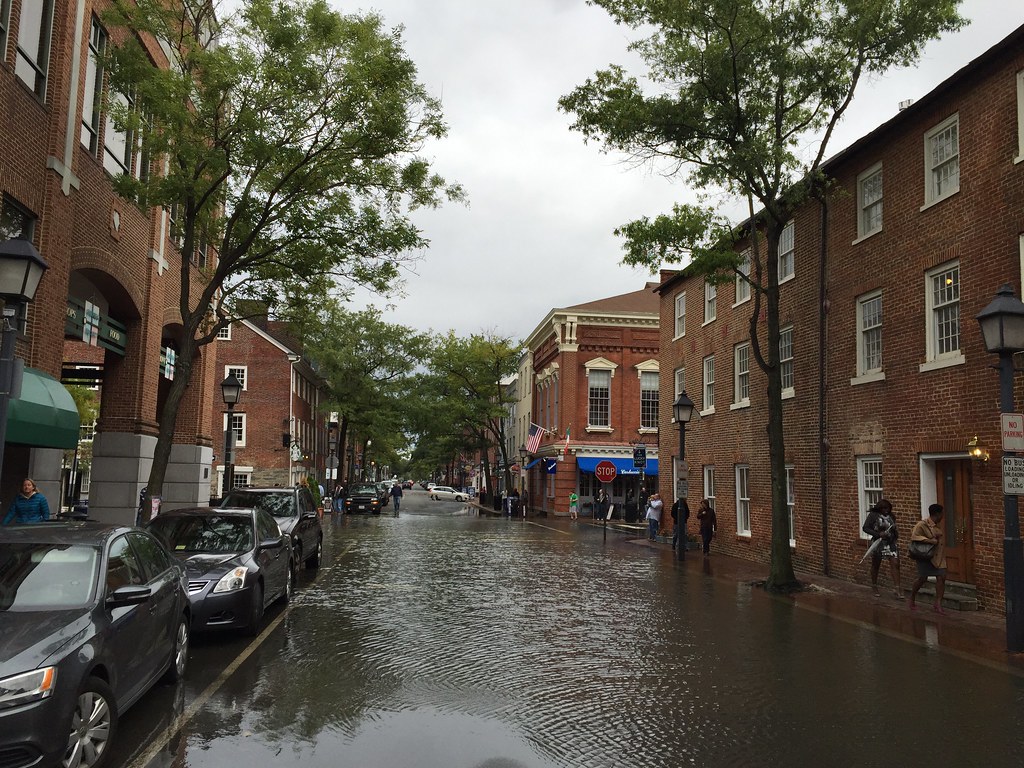
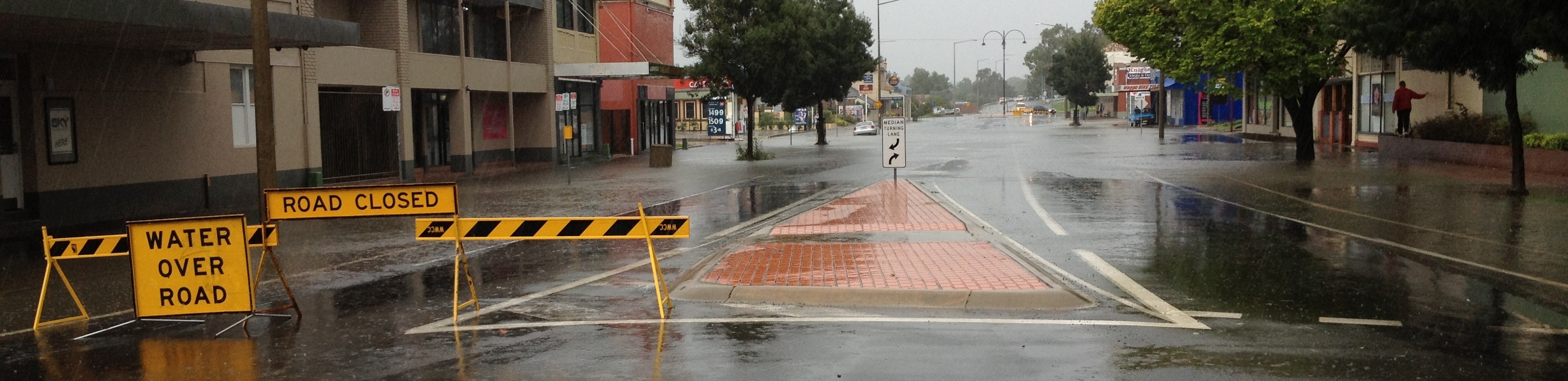
 Downtown Street closed due to excessive flooding
Negative Impacts of Stormwater Runoff
Downtown Street closed due to excessive flooding
Negative Impacts of Stormwater Runoff
Excessive rainfall can cause significant disruption to the urban environments that we live in.
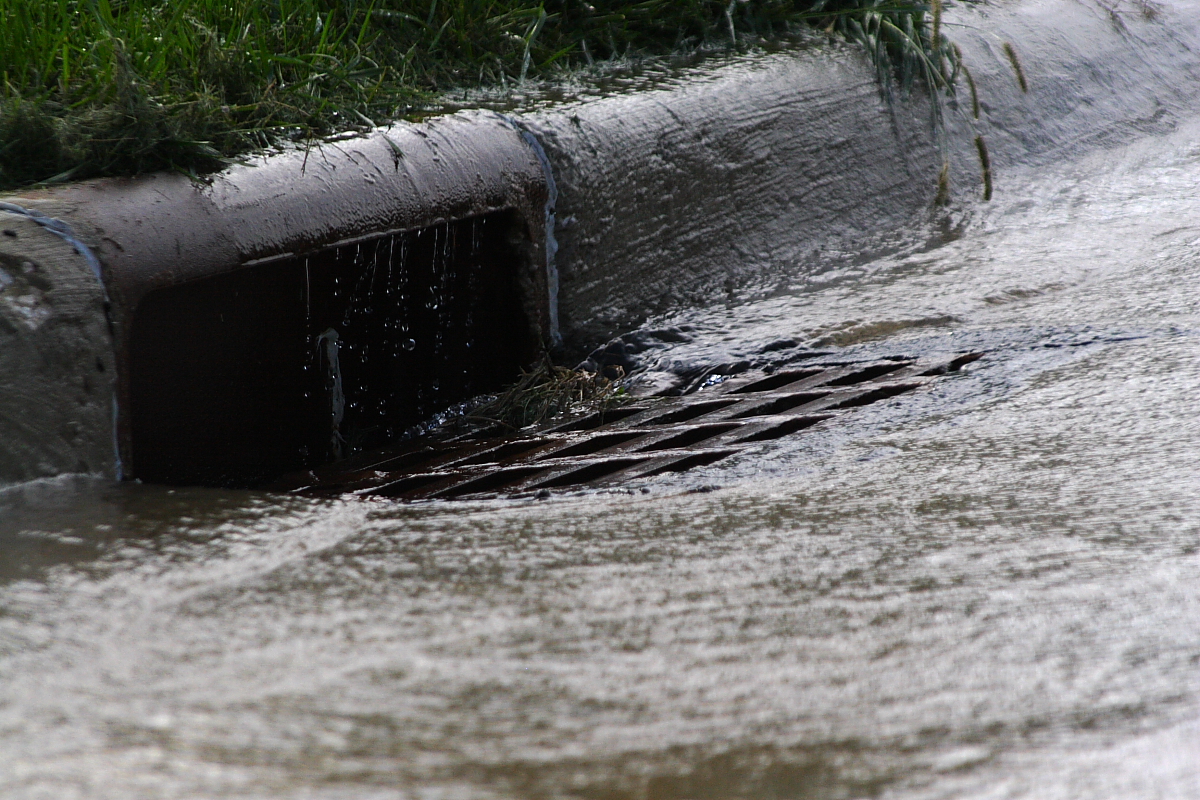
Storm drains can struggle to keep up with the constant flow of water, causing streets, sidewalks, and other
impermeable areas to overflow. This can cause a number of disruptions to residents in these areas such as:
- Flooding
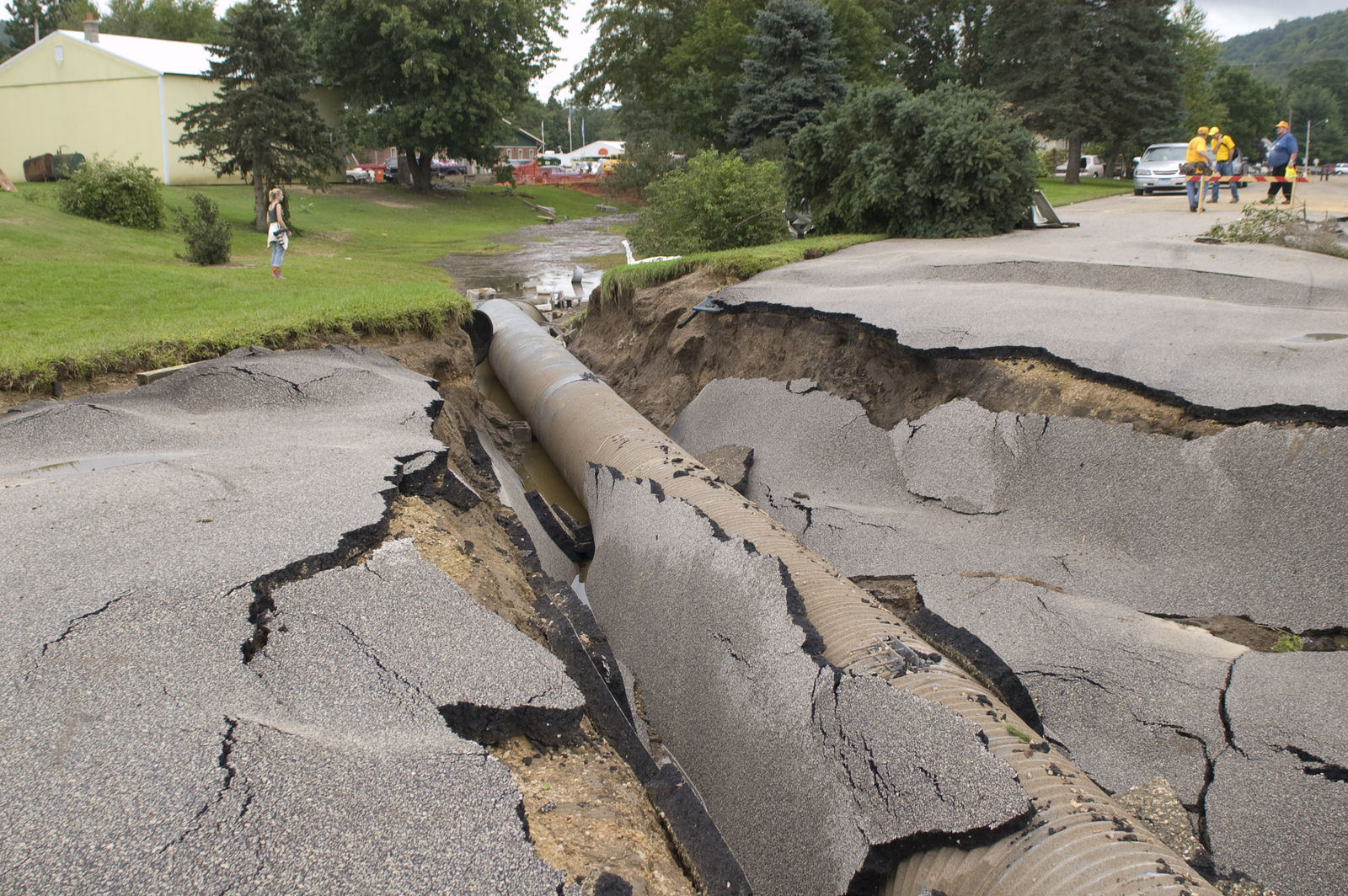
- Erosion
- Property Damage
- Water Pollution
- Travel Disruption
- Emergency Services Disruption
- Health and Safety Risks
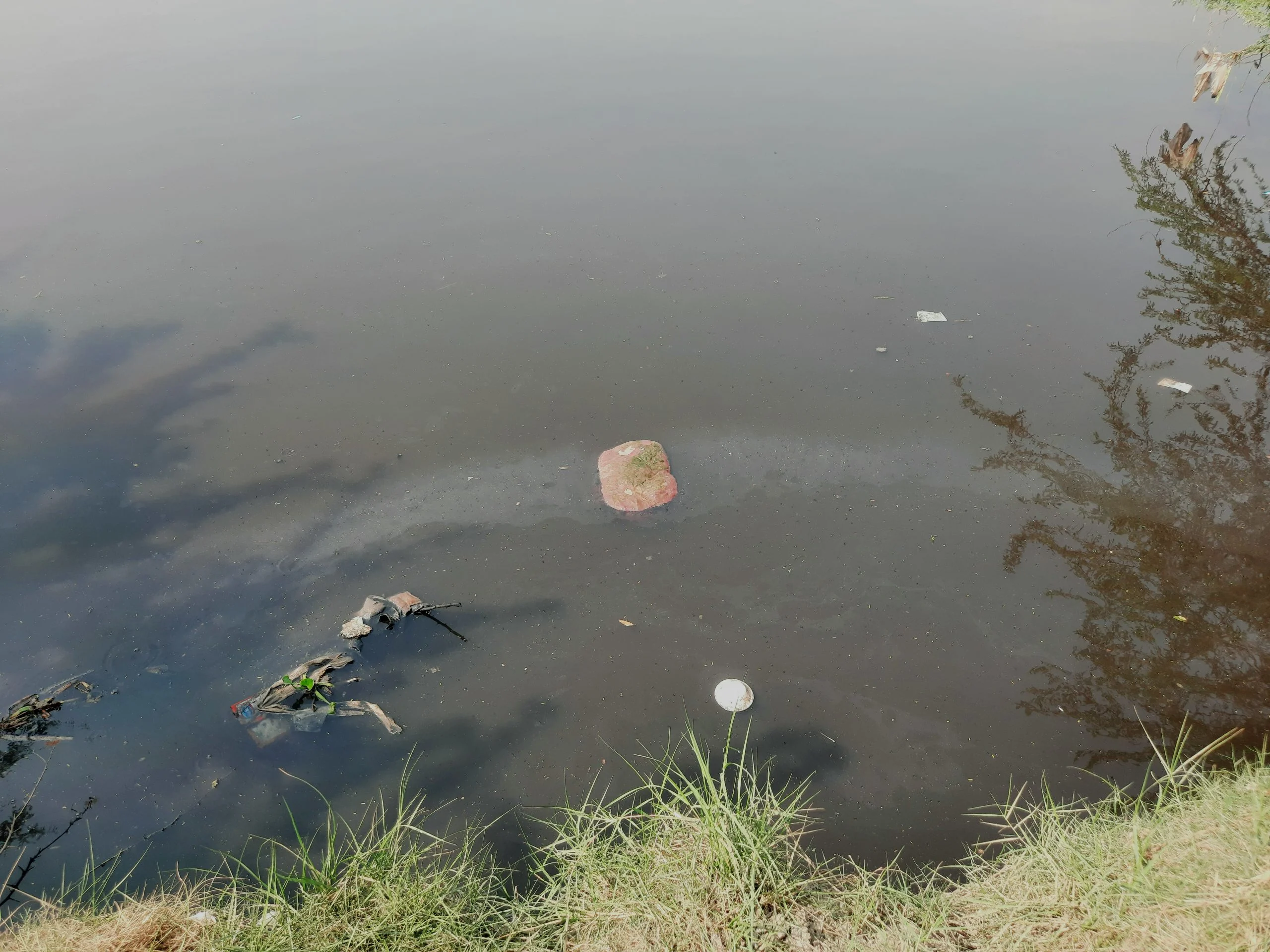
Water pollution caused by runoff can cause additional long term damage to the environment due to
the unhealthy debris that can be carried away by flowing water. Many of our streets have motor oil, gas, road salt,
fertilizer, litter, and other debris that are transported by the flowing water. Storm drains can easily be clogged
by this debris, causing them to become even less effective at moving excessive water away from urban areas. The more
toxic substances like oil, gas, fertilizer, and road salt can have a significant impact on the natural environment and
human health as well. Eventually, these substances will get into waterways that we use for enjoyment, economic purposes,
and for our basic water supply. This can cause a number of negative outcomes such as:
- Beach Closures
- Bacteria growth
- Viruses
- Habitat destruction
- Algal growth
- Oxygen depletion
- Groundwater contamination
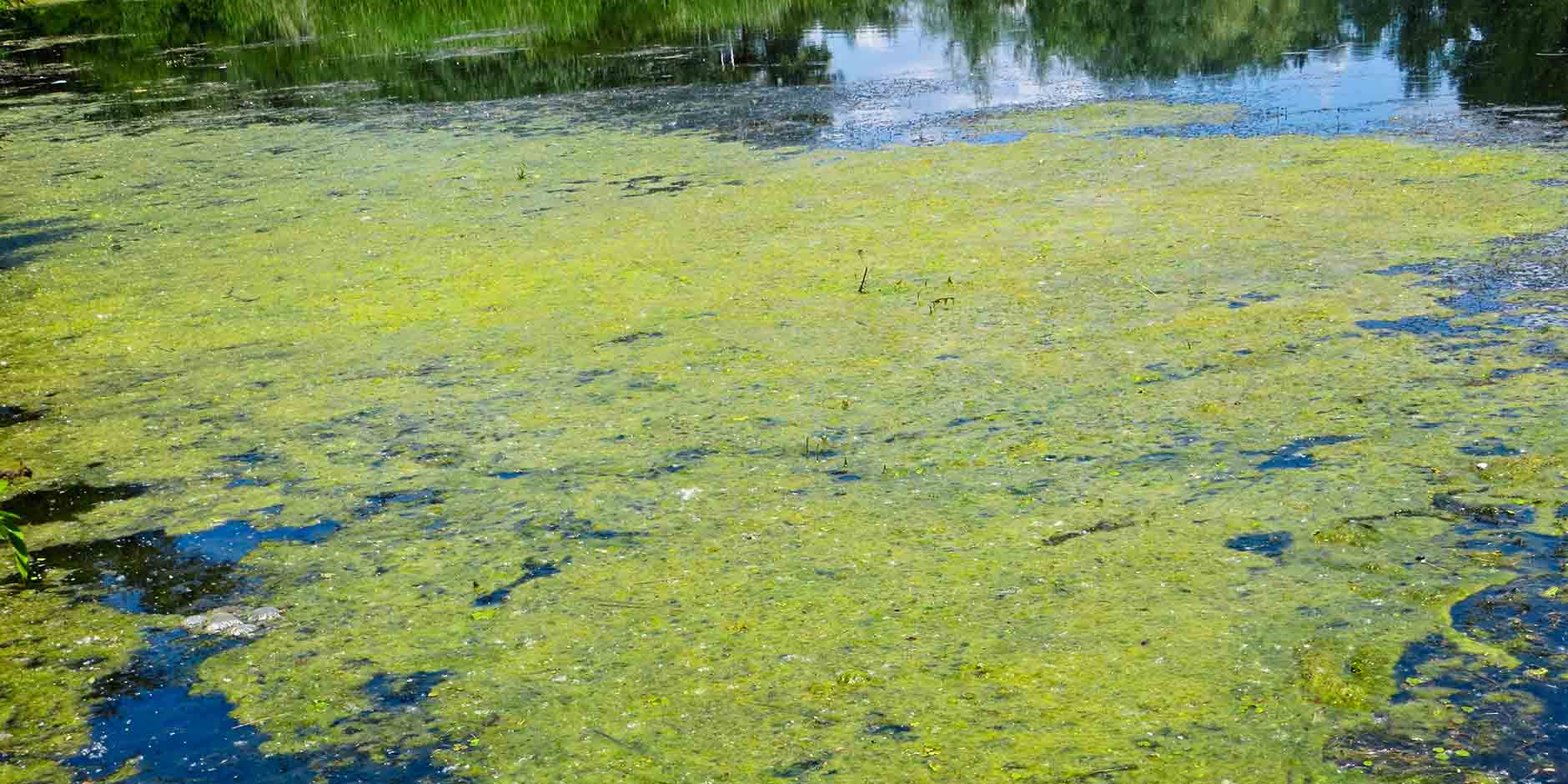 Algae growth in a wetlands area
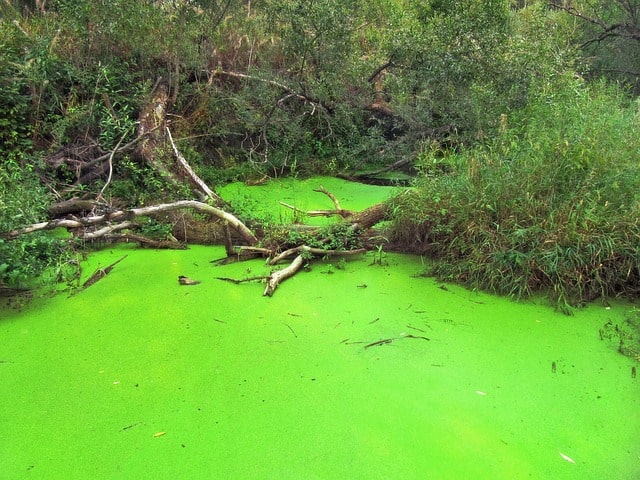 Algae growth in a storm ditch
Groundwater contamination as a result of flooding can have an especially negative impact on the
environment. Groundwater is used for a variety of purposes such as agricultural irrigation and human consumption,
which could be at risk if contaminated. The movement of water from the land surface into
the soil is called infiltration. A number of factors can contribute to the amount of infiltration that happens in a given area, such as:
- Soil Type
- Land Slope
- Landcover (grass or other vegetation)
- Storm characteristics, such as intensity and duration
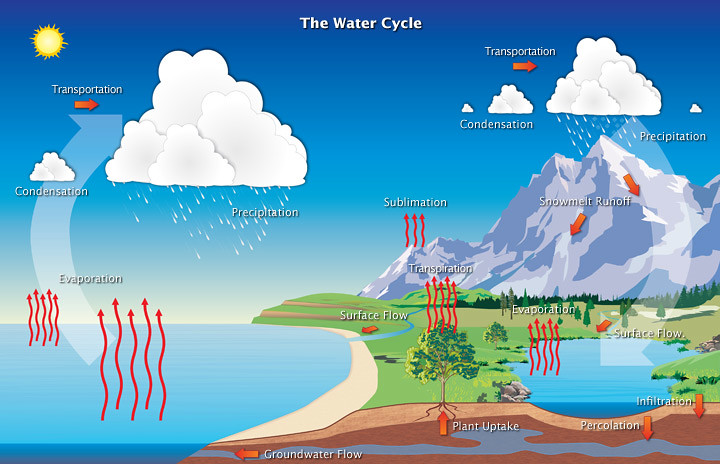 Diagram of the water cycle
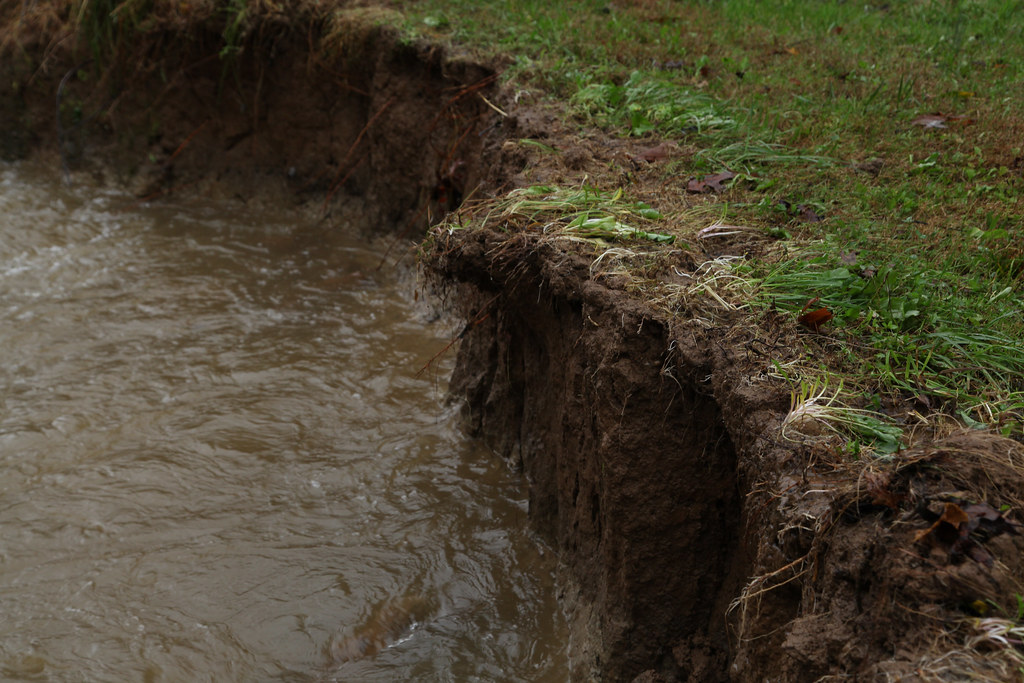 Grassy area being eroded from flowing water
If the amount of precipitation is greater than the infiltration capacity of an area, runoff will
occur. This is generally measured by the amount of rainfall in millimeters per hour. Tools such as a permeameter or
ring infiltrometer are commonly used to measure this. You can think of infiltration as the velocity that runoff is
absorbed into the soil. More dense types of soil will absorb stormwater at a slower rate. For example, sandy soil will
allow for faster infiltration, where soil containing more clay will be slower at infiltration.
Measuring infiltration to determine soil’s water absorption capacity is important for Engineers,
hydrologists, and farmers.
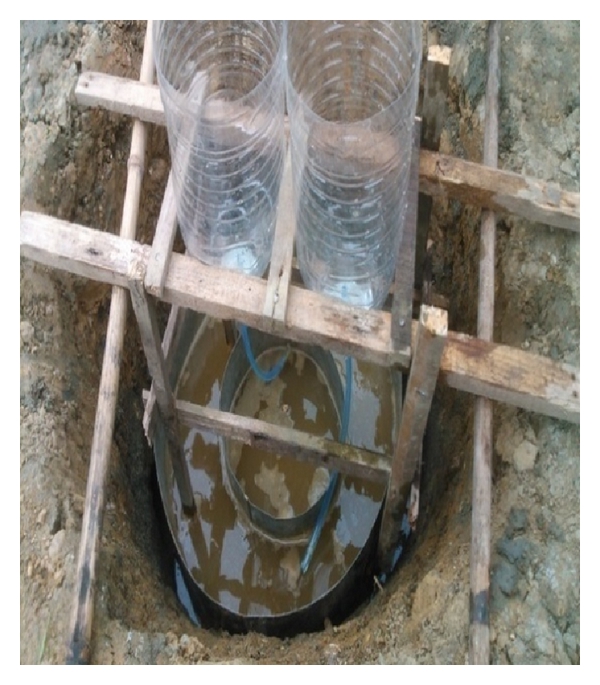 Example of a ring infiltronometer being used to determine infiltration
- Planning for areas where buildings will be constructed
- Stormwater management plans
- Preventing erosion of soil
- Understanding subsurface conditions
- Determining amount of irrigation needed in an area
- Deciding what plants can be grown
- Water storage capabilities of the soil
- Learn how water moves through the soil
- Impact on river flows and groundwater levels
- How much pollution is transported
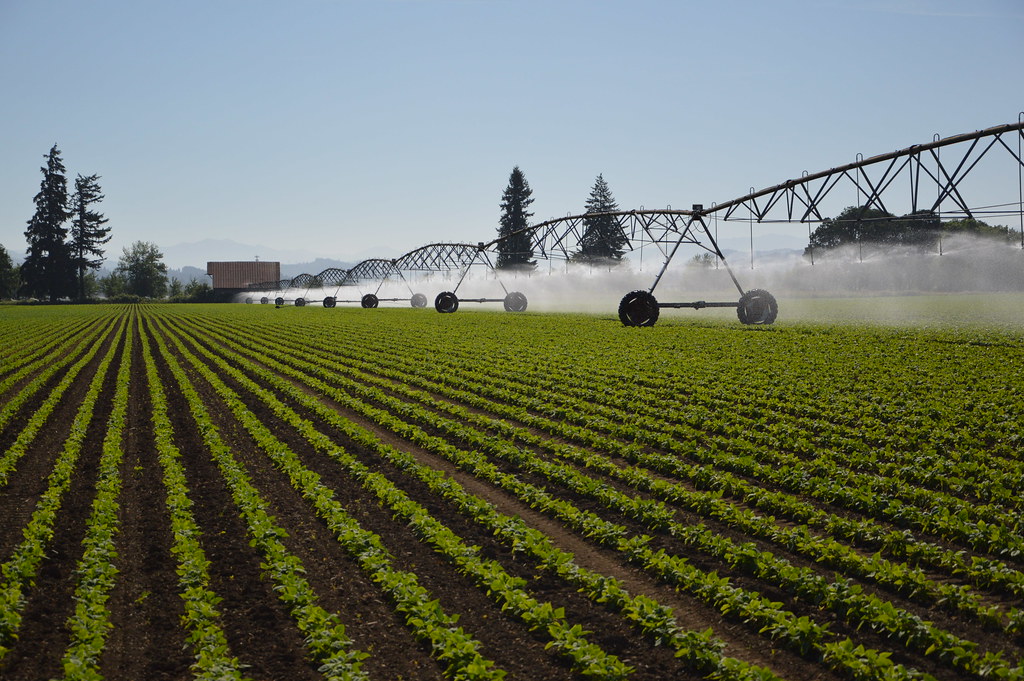 Farmers will measure infiltration to determine their irrigation needs